
- 1800 6129

Aquaculture rope is one of the essential materials that helps oyster farming systems, mussel farming structures, fish cages, ponds, and offshore farming models operate safely and efficiently in saltwater, brackish water, and freshwater environments. More than just a connecting or anchoring component, rope directly affects system durability, farming management, maintenance costs, and long-term operational stability. Let’s explore aquaculture rope and its practical applications with SIAM Brothers Vietnam in the article below.
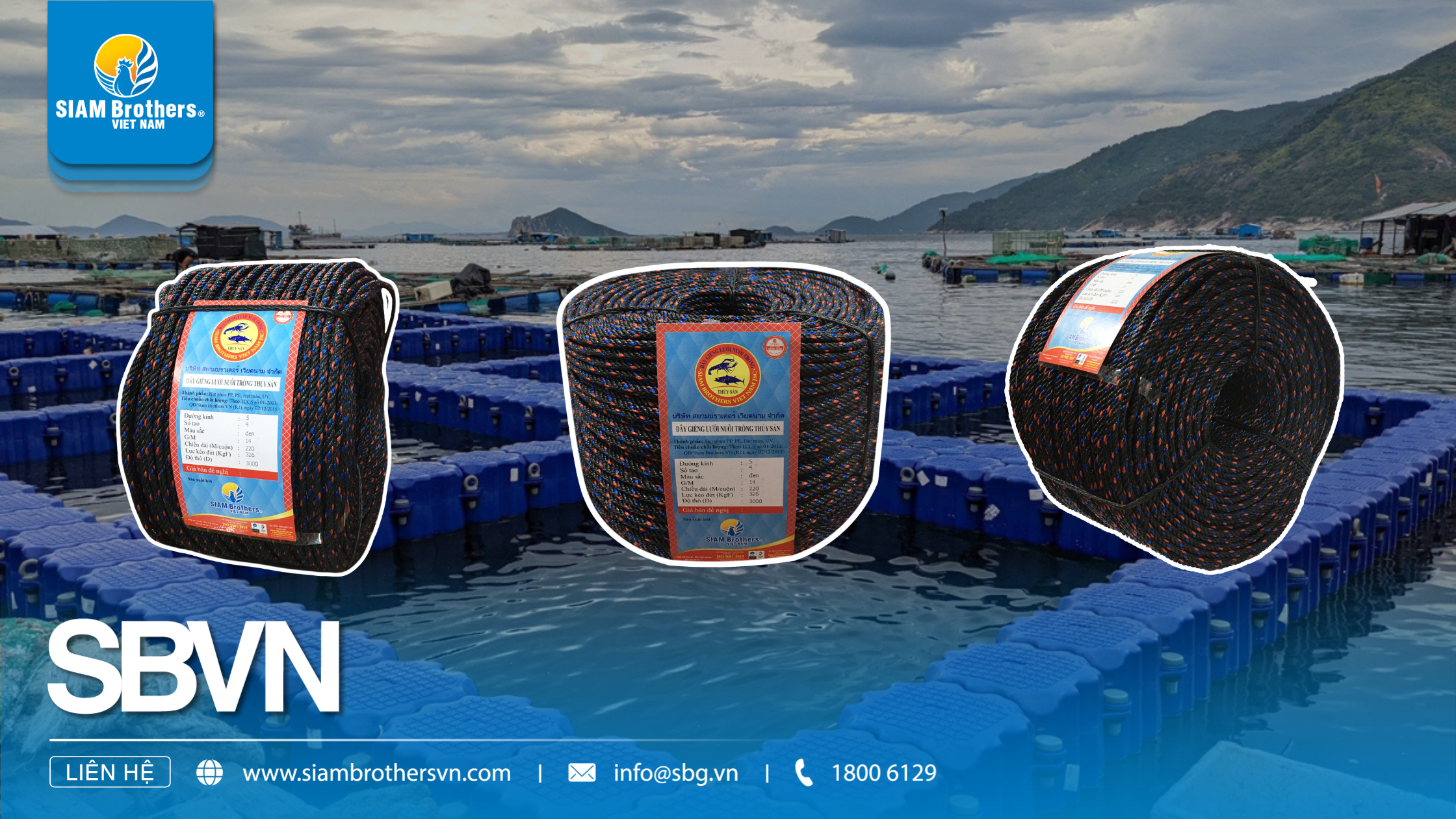
Aquaculture Rope - Source: SIAM Brothers Vietnam
Aquaculture rope is a specialized type of rope used in aquaculture models such as oyster farming, mussel farming, fish cage farming, ponds, lakes, lagoons, and offshore farming areas. Depending on its purpose, aquaculture rope can be used as net rope, oyster hanging rope, cage fixing rope, anchor rope, boundary rope, or connecting rope between different parts of the farming system.
Unlike ordinary rope, aquaculture rope must meet higher requirements for strength, durability, abrasion resistance, UV resistance, and long-term performance in water environments. In offshore farming areas or locations with strong currents, rope quality directly affects the stability and safety of the entire aquaculture system.
Today, aquaculture ropes are commonly made from synthetic materials such as PP (Polypropylene), PE (Polyethylene), or other specialized materials. These materials are lightweight, durable, and suitable for outdoor use, humid conditions, and saltwater environments.
During operation, aquaculture rope often bears loads from nets, farmed species, floats, anchors, currents, and waves. Therefore, tensile strength is one of the most important factors. A rope with good strength helps reduce the risk of breaking, stretching, or deforming during use.
Aquaculture ropes are constantly exposed to water, mud, algae, marine growth, and friction points on cages, frames, anchors, or support structures. Without good abrasion resistance, the rope may wear out quickly, increasing replacement and maintenance costs.
Most aquaculture systems are installed outdoors. Ropes are frequently exposed to sunlight, rain, wind, and temperature changes. UV resistance helps reduce aging, brittleness, and quality degradation after long-term outdoor use.
One major advantage of PP and PE ropes is their lightweight structure, making transportation, installation, collection, and maintenance more convenient. For large-scale aquaculture models, this can help save time and labor during operation.
Aquaculture rope should be safe for water environments and farmed species. High-quality ropes are designed to resist rotting, absorb little water, and avoid releasing harmful substances, helping maintain a stable farming environment.
Aquaculture rope can be used in many farming models, from small household systems to large-scale commercial farms.
|
Application |
Role of Rope |
Selection Requirements |
|
Oyster farming |
Used as oyster hanging rope or to secure oyster clusters by layer |
Durable, suitable surface for oyster attachment, saltwater resistant, and easy to clean |
|
Mussel farming |
Used to hang or secure mussels in farming structures |
Good tensile strength, abrasion resistance, and long-term stability in water |
|
Fish cage farming |
Connects nets, frames, floats, and anchors |
Strong load-bearing capacity, UV resistance, and saltwater resistance |
|
Ponds, lakes, and lagoons |
Used as net rope, boundary rope, or support rope |
Easy to install, durable, and suitable for the farming scale |
|
Deep-water farming areas |
Stabilizes the system against currents and waves |
Strong pulling resistance, outdoor durability, and reduced degradation over time |
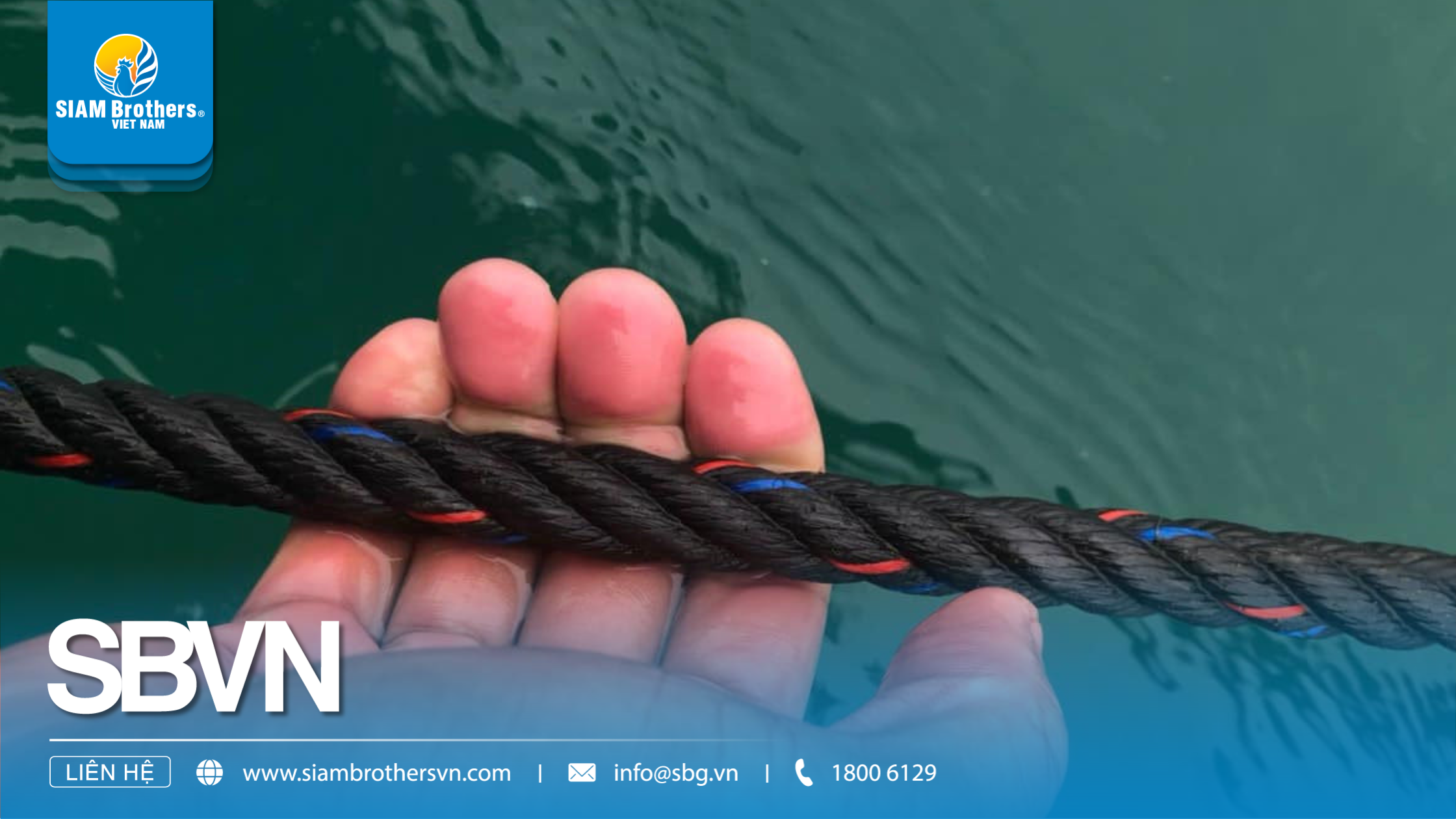
Aquaculture Rope - Source: SIAM Brothers Vietnam
In commercial oyster farming, oyster hanging rope is an important component that secures oysters throughout their growth cycle. The rope can be used to hang oysters vertically, arrange them in clusters, or integrate them into raft and offshore farming systems.
A suitable oyster hanging rope should be durable, resistant to saltwater, and able to perform well for long periods without becoming brittle or weak. Its surface should also support oyster attachment, helping oysters grow more stably and distribute more evenly along the rope.
Using specialized rope in oyster farming brings several benefits:
Helps oysters stay exposed to natural water flow.
Supports better oxygen and nutrient absorption.
Reduces the risk of oysters falling off during farming.
Makes inspection, cleaning, and harvesting easier.
Contributes to better commercial oyster quality.
For areas with strong currents or offshore farming conditions, farmers should prioritize ropes with good tensile strength, abrasion resistance, and UV resistance to ensure stable operation throughout the farming cycle.
Similar to oyster farming, mussel farming also requires a stable rope system to hang, secure, or connect mussel clusters. Rope helps distribute mussels properly in the water, reduce overcrowding, and support healthier growth.
In pearl mussel or commercial mussel farming models, rope must have good load-bearing capacity because it supports farmed species over a long period. It should also be durable in water, resistant to abrasion, and safe for the living environment of mussels.
Choosing the right rope helps farmers:
Manage farming density more effectively.
Inspect and clean the system more conveniently.
Reduce the risk of rope breakage or stock loss.
Optimize farming space by depth or layer.
Lower replacement costs during operation.
In fish cage farming, rope is not merely a supporting material but a key connecting component of the entire system. It can be used to secure nets to cage frames, connect floats, anchor cages, or form rope lines around the farming area.
In real operating conditions, fish cages are affected by waves, wind, currents, and the weight of farmed fish. If the rope is not strong enough, the system may become unstable, nets may loosen or tear, and the cage structure may shift out of position. Therefore, ropes used in fish cage systems need to be strong, durable, and suitable for saltwater environments.
An efficient fish cage system requires the combination of ropes, nets, floats, frames, and anchors. Among these components, rope acts as the connecting link that helps the whole system operate more safely and stably.
To choose the right rope, farmers should consider the farming model, environmental conditions, and actual load requirements.
For ponds, lakes, or calm-water areas, farmers can choose ropes with moderate durability, easy handling, and specifications suitable for the farming scale. For saltwater, coastal, or offshore farming areas, priority should be given to ropes with saltwater resistance, UV resistance, and good abrasion resistance.
Oyster farming, mussel farming, and fish cage farming have different requirements in terms of load, installation method, and usage cycle. For oysters and mussels, rope must support hanging, attachment, or fixation. For fish cages, rope must bear heavier loads and connect nets, floats, frames, and anchors securely.
|
Rope Material |
Features |
Suitable Applications |
|
PE |
Lightweight, durable, water-resistant, suitable for outdoor environments |
Fish cages, anchor ropes, net ropes, coastal aquaculture |
|
PP |
Lightweight, easy to use, cost-effective, and floats on water |
Ponds, lagoons, net rigging, small and medium-scale farming |
|
HDPE / Specialized Materials |
Durable, saltwater-resistant, anti-aging, suitable for harsh environments |
Oyster farming, long-term cage systems, dynamic water areas |
|
Composite Rope |
High strength, reduced aging, suitable for professional models |
Large-scale commercial aquaculture farms |
Rope diameter, roll length, and color should match the aquaculture system. For large-scale models, farmers should choose ropes with stable specifications, easy replacement, and customizable options to match cage or raft designs.
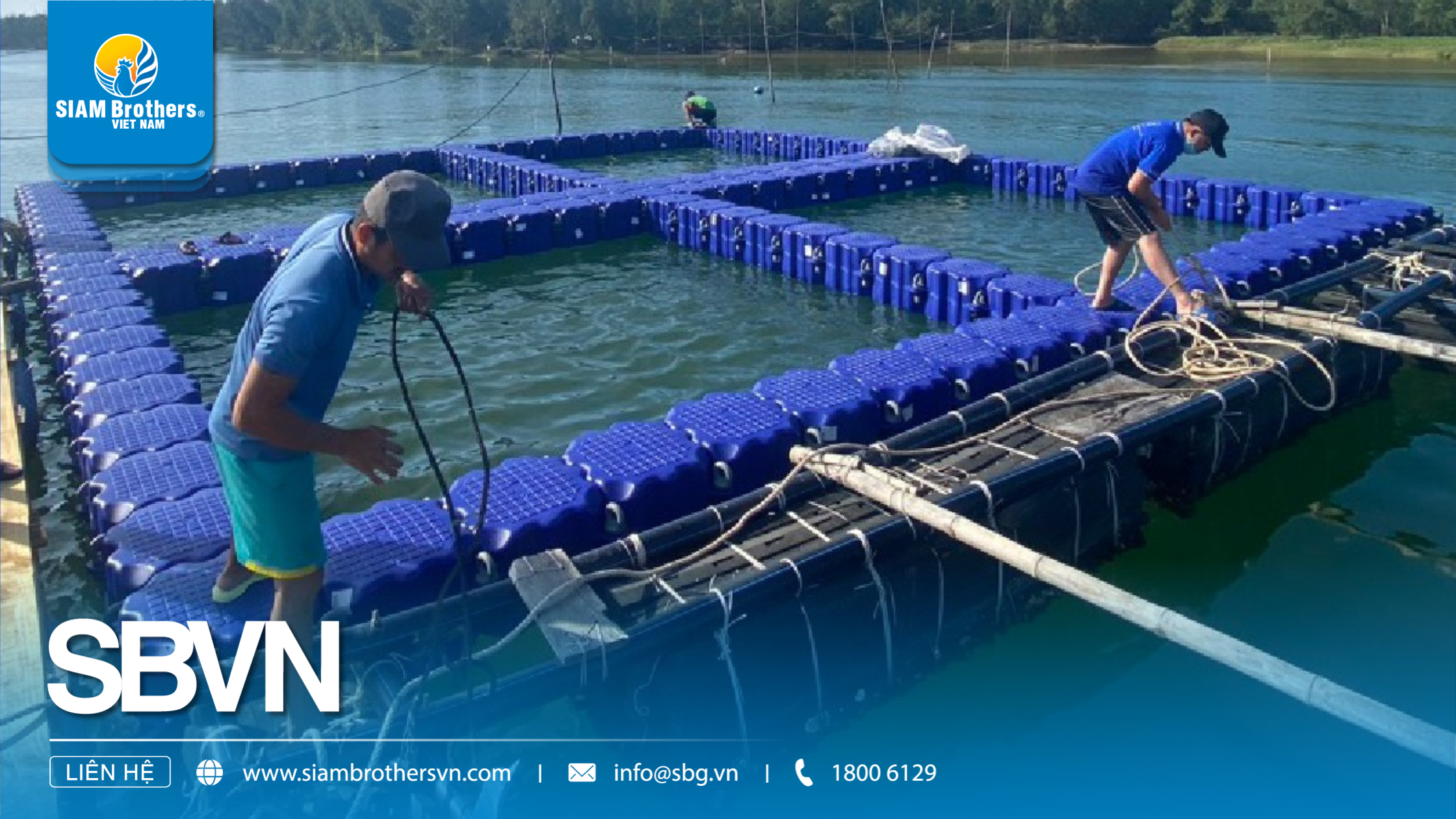
Aquaculture Rope - Source: SIAM Brothers Vietnam
To maintain long-term durability, aquaculture rope should be installed properly and not overstretched. Farmers should avoid allowing the rope to rub continuously against sharp edges on cage frames, anchors, or fixed posts.
After each farming cycle, the rope should be inspected carefully, especially at high-load points, knots, and connection areas. If the rope shows signs of fraying, wear, broken strands, deformation, or reduced strength, it should be replaced promptly to prevent risks during operation.
When not in use, rope should be cleaned, dried, and stored in a cool, well-ventilated area. Prolonged exposure to strong chemicals or high temperatures should be avoided, as these factors may reduce the service life of the material.
Aquaculture rope is an important material in many modern farming models, from oyster and mussel farming to fish cage systems and pond net rigging. A suitable rope not only helps secure and connect the farming system but also improves management efficiency, reduces maintenance costs, and minimizes operational risks.
When choosing aquaculture rope, farmers should consider material, durability, tensile strength, farming environment, farmed species, and system scale. For outdoor, coastal, or offshore farming models, ropes with UV resistance, saltwater resistance, abrasion resistance, and high durability should be prioritized.
SIAM Brothers Vietnam provides rope solutions for aquaculture, meeting diverse needs in ponds, fish cages, oyster farming, mussel farming, and many other aquaculture applications.
Read more: Top Durable Aquaculture Ropes for Modern Fish Farming and Marine Applications
Source: SIAM Brothers Vietnam
FAQ - Frequently Asked Questions About Aquaculture Rope
A: Aquaculture rope is commonly made from synthetic materials such as PE, PP, HDPE, or other specialized materials. These materials are lightweight, durable, water-resistant, and suitable for outdoor farming environments.
A: Yes. Oyster hanging rope is a specialized type of aquaculture rope. It usually needs good durability, saltwater resistance, and a suitable surface that helps oysters attach and grow stably throughout the farming cycle.
A: Aquaculture rope should be replaced when it shows signs of fraying, wear, partial breakage, deformation, reduced strength, or long-term degradation. For fish cage systems, anchor ropes, and high-load applications, regular inspection is essential to ensure safety.
Contact us:
Address: 5th floor, VRG Building, 177 Hai Ba Trung Street, Vo Thi Sau Ward, Ho Chi Minh City, Vietnam
Tel: (+84) 28 38 912 889
Hotline: 1800 6129
Facebook: www.facebook.com/siambrothersvn
Email: info@sbg.vn
YouTube: youtube.com/@siambrothersvietnam1728
OA Zalo: zalo.me/1402339229697925373
App SBVN ID:
CHPlay: https://bit.ly/SBVNID-Android
Appstore: https://bit.ly/SBVNID-iOS








Specializing in Agricultural and Fisheries Products & Multipurpose Wire