
- 1800 6129

Can interlocking HDPE floating pontoons really help fish farmers reduce upfront costs without compromising their day-to-day needs? It all comes down to choosing the right floats and planning your materials before construction begins. There’s more to consider than just size and durability. You also need to look at the working load, platform area, wave and wind conditions, and how the floating modules connect. Once you have these details, it becomes much easier to estimate the number of floats, frame materials, ropes, nets, and accessories you'll need. That means fewer unnecessary purchases and fewer unexpected expenses.
In this guide, SIAM Brothers Vietnam walks you through choosing suitable HDPE pontoons, preparing a material list, and gathering the information you need to request a quote for your fish farm project.
How many HDPE floats do you actually need to keep your fish farming platform afloat without overspending?
There’s no one-size-fits-all answer. The number of interlocking HDPE floating pontoons depends on your platform dimensions, total load, usable buoyancy per float, and local farming conditions.
Before placing an order, follow these three steps to get a practical estimate and plan your materials more confidently.

First, figure out how large your fish farming platform will be and what it needs to support. Don't just calculate the weight of the frame. Once the platform is in use, it will also carry people, equipment, and other fish farming supplies.
Here's what you should include:
For example, a fish farming platform measuring 5 m × 5 m has a total area of 25 m².
But that measurement alone won't tell you how many floats to buy. You still need to calculate the total weight the floating system will actually support.
Once you've calculated the total load, the next step is to check the usable buoyancy of the HDPE floats you're planning to use.
Here's a simple formula to estimate the quantity: Number of HDPE floats = Total design load ÷ Usable buoyancy per float
Where:
There are also a few important things to keep in mind:
Let's say you're planning to build a 25 m² fish farming platform using interlocking HDPE floating pontoons.
To make the calculation easier to understand, here's a hypothetical example:
Based on these assumptions, the platform would need at least 25 floats when considering total buoyancy alone.
Keep in mind that this is only a preliminary estimate, not an approved construction specification.
Before confirming your order, make sure to check:
Important note: The loads, additional allowance, and buoyancy values used in this example are for illustration only. They are not verified technical specifications for any particular SIAM Brothers Vietnam float model.
Depending on the size and design of your fish farm, an HDPE floating platform typically requires several key components.
Here's what you'll usually need:
Before buying anything, it's a good idea to prepare a material list showing the required quantities, specifications, and unit prices. This makes it much easier to manage your budget, especially if you're building several fish cages at once.
Two fish farming platforms can have the same surface area but very different construction costs.
So, what makes the difference?
To estimate your overall investment, use this simple cost breakdown:
Estimated total cost = HDPE floats + Platform frame + Ropes, nets, and mooring system + Accessories + Transportation + Labor + Contingency costs
For example, if you're planning a 25 m² fish farming platform, ask your supplier for a detailed quotation covering each material category instead of requesting only the price per float.
That way, you can compare different options more easily and see where your budget needs to go.
If you're a fish farmer, cooperative, or aquaculture business looking to expand, choosing the right materials is often more important than simply finding the lowest price.
Here are a few practical ways to manage your investment:
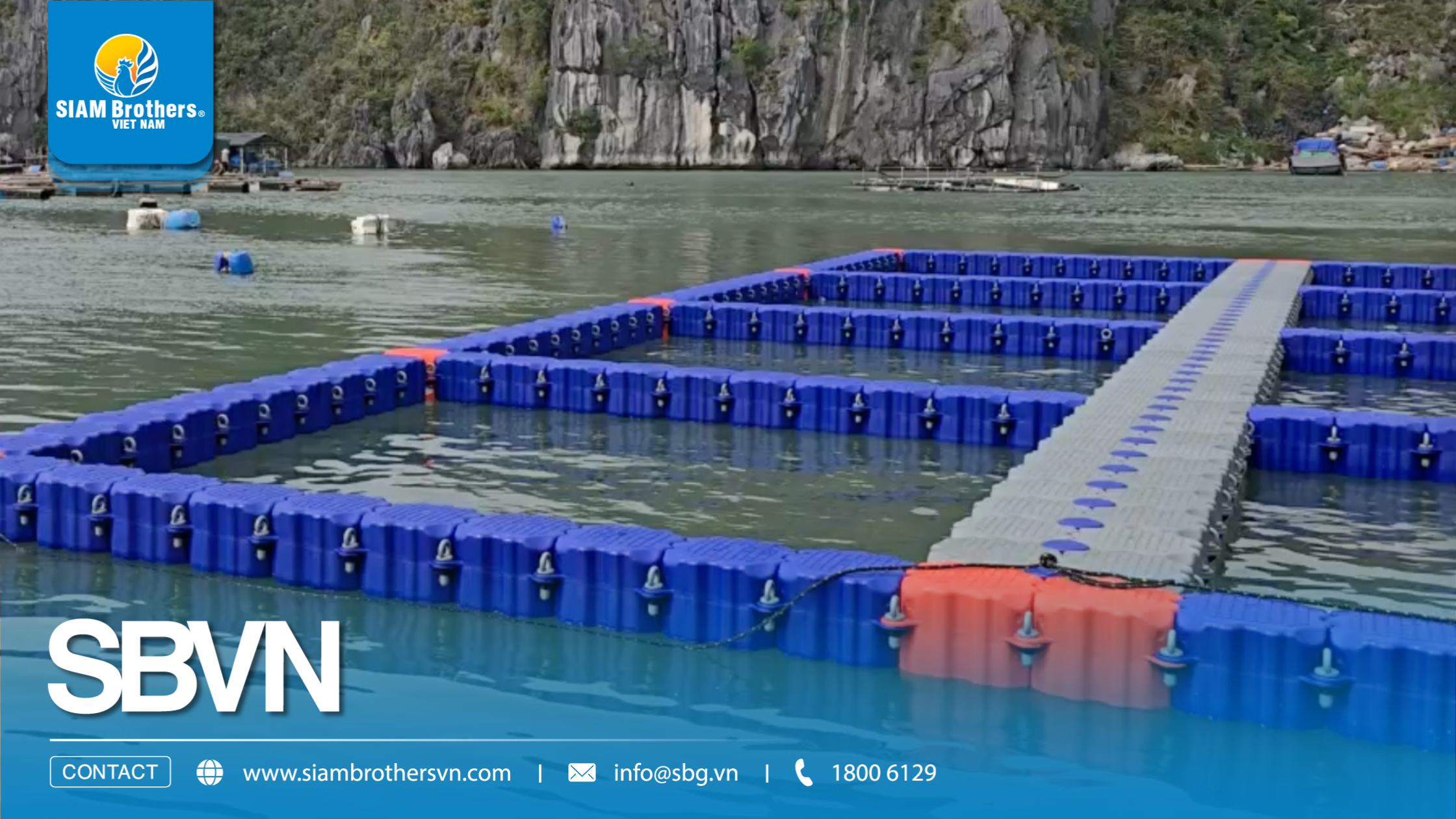
The number of interlocking HDPE floating pontoons depends on the platform area, total load, and usable buoyancy of each float.
A larger platform doesn't necessarily need proportionally more floats.
To estimate the right quantity, consider these factors:
For example, two fish farming platforms may each cover 25 m² but require different numbers of floats because their frames and equipment have different weights.
That's why calculating the total load should always come before deciding how many floats to buy.
Yes. HDPE floats are suitable for many saltwater applications because the material absorbs very little water and is resistant to corrosion.
However, actual service life and performance still depend on product quality and operating conditions.
When choosing floats for marine fish farming, pay attention to the following:
If your fish farm is located in an area with large waves or strong currents, the structural design and mooring system will need additional assessment.
Remember, just because HDPE performs well in seawater doesn't mean every HDPE float model is suitable for every offshore condition.
If you're building multiple fish cages or expanding your aquaculture operation, look for a supplier that provides clear product information, can handle your order volume, and offers suitable quotation terms.
Before placing an order, check the following:
SIAM Brothers Vietnam manufactures and distributes products for the fishing and aquaculture industries, including HDPE fish farming floats, ropes, and related equipment.

If you're planning to purchase HDPE floats for your fish farm, prepare a few key details first: platform area, number of fish cages, estimated load, and installation location.
Then, contact SIAM Brothers Vietnam to discuss suitable product specifications and request a quotation based on your project requirements.
Interlocking HDPE floating pontoons offer a durable and flexible solution for building fish farming platforms. Their resistance to wear and suitability for a range of aquatic environments make them a practical option for aquaculture projects.
Still, getting the best value from your investment starts with choosing the right floats. Consider the required load capacity, platform dimensions, and local farming conditions before making a decision.
Accurately calculating float quantities and preparing a complete material list, including frames, ropes, nets, and accessories, can help you manage your budget and avoid unexpected expenses.
And don't focus on the initial purchase price alone. Material quality, structural stability, and long-term maintenance matter just as much.
Looking for HDPE floats for your fish farming project? Contact SIAM Brothers Vietnam today for product guidance, material planning support, and a quotation tailored to your needs.
Source: SIAM Brothers Vietnam
Contact us:
► Address: 5th floor, VRG Building, 177 Hai Ba Trung Street., Xuan Hoa Ward, Ho Chi Minh City, Vietnam
► Hotline: 1800 6129
► Tel: (+84) 28 38 912 889
► Email: info@sbg.vn
► Follow us for more details at: Facebook - Zalo OA - Tiktok - Youtube - LinkedIn
Download SBVN ID app here:
► CHPlay
► Appstore







Specializing in Agricultural and Fisheries Products & Multipurpose Wire