How long should a Ship Mooring Rope be to keep a vessel stable and secure in all sea conditions? This is a critical question for fishermen, vessel owners, and maritime transport businesses when selecting mooring equipment. In practice, there is no fixed length for a mooring rope, as it depends on vessel size, water depth, weather conditions, and local current characteristics. Accurately calculating the rope length not only improves holding efficiency but also minimizes risks such as rope failure or anchor dragging, which can lead to significant losses.
In this article, SIAM Brothers Vietnam will guide you on how to determine the appropriate Ship Mooring Rope length based on standard ratios, along with practical examples and expert selection insights.
1. Why Is Ship Mooring Rope Length Important?
The length of a Ship Mooring Rope is not just a technical specification—it directly determines how effectively a vessel can be secured under various mooring conditions. An incorrect choice can lead to anchor dragging, rope breakage, or even loss of vessel control, especially in harsh marine environments with strong waves and currents.
1.1. Impact on Mooring Stability
- The rope length determines the angle between the anchor and seabed, directly affecting holding force
- A longer rope improves anchor grip and reduces vertical pulling forces
- Enhances vessel stability in strong winds and rough seas
1.2. Risks of Using a Rope That Is Too Short or Too Long
1.2.1. Rope Too Short
- Steeper pulling angle reduces anchor holding efficiency
- Higher risk of anchor dragging in strong currents or waves
- Increased tension may cause Ship Mooring Rope failure
1.2.2. Rope Too Long
- Difficult to control the anchoring radius, increasing collision risk
- Higher friction with the seabed, reducing rope lifespan
- Proper rope length distributes load evenly, preventing localized stress points
- Reduces wear caused by continuous seabed friction
- Improves long-term performance for materials such as PP, PE, and Nylon
1.4. Key Factors in Real Marine Conditions
- Water depth directly determines the required rope length
- Seabed composition (sand, mud, rock) affects anchor holding performance
- Waves, wind, and currents continuously change the load on the Ship Mooring Rope
2. How Long Should a Ship Mooring Rope Be?
After understanding its importance, the key question remains: how long should a Ship Mooring Rope be for safe and effective mooring? In reality, there is no universal number—it must be calculated based on standard ratios combined with actual operating conditions.
2.1. Scope Ratio (Rope Length to Water Depth)
- Common rule: Ship Mooring Rope length = 5–7 times water depth
- Ratio 5:1 for calm conditions with minimal waves
- Ratio 7:1 or higher for rough seas, strong winds, or complex currents
This ratio optimizes the anchor angle and improves seabed holding capacity
- Rope length = Water depth × Safety factor (5–7)
- Add bow height above waterline for more precise calculation
2.2.2. Practical Examples
- Depth 10m: required rope length = 50–70m
- Depth 20m: required rope length = 100–140m
In rough sea conditions, always choose the higher range for safety
2.3. Adjustments Based on Vessel Size and Type
- Small vessels (<10m): ratio 4:1–5:1 in sheltered waters
- Medium vessels (10–20m): maintain at least 5:1–7:1
- Large vessels or cargo ships: use higher ratios for stronger holding force
- Heavier loads require longer and thicker Ship Mooring Rope
2.4. Additional Practical Considerations
- Seabed conditions: mud and sand provide better grip than rocky seabeds
- Weather conditions: strong winds and waves require longer rope
- Vessel density: rope length must be controlled to avoid collisions
2.5. Quick Reference Table
- Depth 5m: rope length 25–35m
- Depth 10m: rope length 50–70m
- Depth 15m: rope length 75–105m
- Depth 20m: rope length 100–140m
3. How to Calculate Ship Mooring Rope Length Based on Vessel Size and Sea Conditions
To determine the correct Ship Mooring Rope length, it is essential to combine vessel specifications with real marine conditions. The following factors provide a practical and accurate approach.
3.1. Based on Vessel Size and Load Capacity
- Larger vessels generate higher tension forces, requiring longer and thicker Ship Mooring Rope
- Small vessels (<10m): apply a 4:1–5:1 ratio in calm conditions
- Medium vessels (10–20m): maintain a 5:1–7:1 ratio for safety
- Large vessels and cargo ships: prioritize ≥7:1 to reduce stress on the anchor point
- Cargo load and onboard equipment directly influence the required rope length and diameter
3.2. Based on Water Depth and Seabed Conditions
3.2.1. Water Depth (Core Factor)
- Measure depth at high tide to avoid insufficient rope length
- Apply formula: Rope length = Water depth × Safety factor (5–7)
- Add bow height above the waterline for improved accuracy
3.2.2. Seabed Characteristics
- Mud or sand seabed: better anchor grip, allowing lower ratios within safe limits
- Rocky or coral seabed: reduced holding capacity, requiring longer rope
- Obstructed areas: include additional length to minimize abrasion
3.3. Based on Weather and Marine Environment
- Strong winds increase horizontal force → require longer Ship Mooring Rope
- Large waves create continuous motion → prioritize higher ratios (6:1–7:1 or more)
- Strong currents can shift vessel position → longer rope helps distribute force
- In unstable weather zones, add 10–20% extra rope length as a safety margin
- Rope length = (Water depth + bow height) × Safety factor
Safety factor guidelines:
- 4–5: sheltered waters with minimal waves
- 5–7: moderate sea conditions
- ≥7: rough seas, large vessels, heavy loads
3.5. Quick Application by Scenario
- Nearshore fishing vessels: use 4:1–5:1 for easier control
- Aquaculture cages and floating systems: use longer rope for long-term stability
- Offshore vessels: always apply ≥6:1 for safety in unpredictable conditions
4. Which Type of Ship Mooring Rope Should You Choose for Safety?
Choosing the right material and specifications for a Ship Mooring Rope is essential to ensure durability, strength, and long-term performance in harsh marine environments.
4.1. Comparison of Common Ship Mooring Rope Types
4.1.1. Polypropylene (PP) Rope
- Lightweight and floats on water, easy to handle
- Excellent water resistance, does not rot in marine environments
- Cost-effective, ideal for fishing boats and nearshore operations
- Moderate elasticity, requires correct diameter selection
4.1.2. Polyethylene (PE) Rope
- Higher mechanical strength and better abrasion resistance than PP
- Strong resistance to UV rays and chemicals
- Suitable for long-term offshore use or harsh marine conditions
- Higher cost but longer service life
4.1.3. Nylon (PA) Rope
- High elasticity, effectively absorbs shock loads from waves
- Superior breaking strength, suitable for large vessels and cargo ships
- Excellent abrasion resistance and dynamic load performance
- Higher initial cost, but offers premium performance
4.2. Key Criteria for Selecting Ship Mooring Rope
- Determine vessel load to select appropriate diameter and breaking strength
- Choose material based on environment: nearshore, offshore, or high-current areas
- Prioritize ropes with UV resistance, abrasion resistance, and saltwater durability
- Ensure safety factor exceeds actual working load to prevent failure
4.3. How to Choose Rope Diameter Based on Load
4.3.1. Basic Guidelines
- Small vessels: rope diameter 10–16mm
- Medium vessels: rope diameter 16–24mm
- Large vessels: rope diameter ≥24mm for higher strength
4.3.2. Important Considerations
- Avoid undersized rope compared to actual load requirements
- Choose products with clear technical specifications and certifications
- Check rope construction (braided or twisted) for long-term durability
4.4. Practical Selection Experience
- Nearshore fishing vessels: PP rope offers a cost-effective solution
- Offshore operations: combine PE or Nylon for improved durability
- Rough sea conditions: prioritize elastic ropes to absorb shock loads
- For businesses and distributors: work with reputable manufacturers to ensure consistent quality
5. FAQs – Frequently Asked Questions About Ship Mooring Rope
5.1. How Long Should a Ship Mooring Rope Be for a 15m Vessel?
- The required Ship Mooring Rope length depends on water depth and environmental conditions
- For a 15m vessel, a scope ratio of 5:1–7:1 is recommended
Example: at a depth of 10m, the required rope length is approximately 50–70m
In rough seas or strong winds, additional length should be used to ensure safety
5.2. Which Type of Ship Mooring Rope Is the Most Durable?
- Nylon rope offers high tensile strength and excellent shock absorption, ideal for large vessels
- PE rope provides strong abrasion resistance and performs well in marine environments
- PP rope is lightweight, cost-effective, and suitable for nearshore fishing vessels
The best choice depends on your specific application and operating conditions
5.3. Can Ship Mooring Rope Be Used Long-Term in Saltwater?
- Specialized ropes such as PP, PE, and Nylon are designed to withstand saltwater environments
- It is important to choose products with UV resistance and anti-aging additives
- Regular cleaning and inspection help extend rope lifespan
- Avoid low-quality or unverified products, as they may degrade quickly
5.4. What Is the Current Price of Ship Mooring Rope?
- The price of a Ship Mooring Rope depends on diameter, material, and manufacturing standards
- PP rope is generally more affordable than PE and Nylon
- Bulk orders often receive better pricing from manufacturers
- For accurate quotations, contact suppliers with specific technical requirements
5.5. Where to Buy Reliable Ship Mooring Rope?
- Prioritize direct manufacturers to ensure consistent quality and competitive pricing
- Check clear technical specifications: breaking strength, diameter, and material
- Choose suppliers with proven experience in fisheries and maritime industries
- Trusted brands such as SIAM Brothers Vietnam are recommended for long-term performance
5.6. How Often Should Ship Mooring Rope Be Replaced?
- Replacement frequency depends on usage intensity and environmental conditions
- Typically ranges from 1–3 years in harsh marine environments
- Replace earlier if signs of wear, reduced strength, or deformation appear
- Regular inspection helps detect issues early and prevents mooring risks
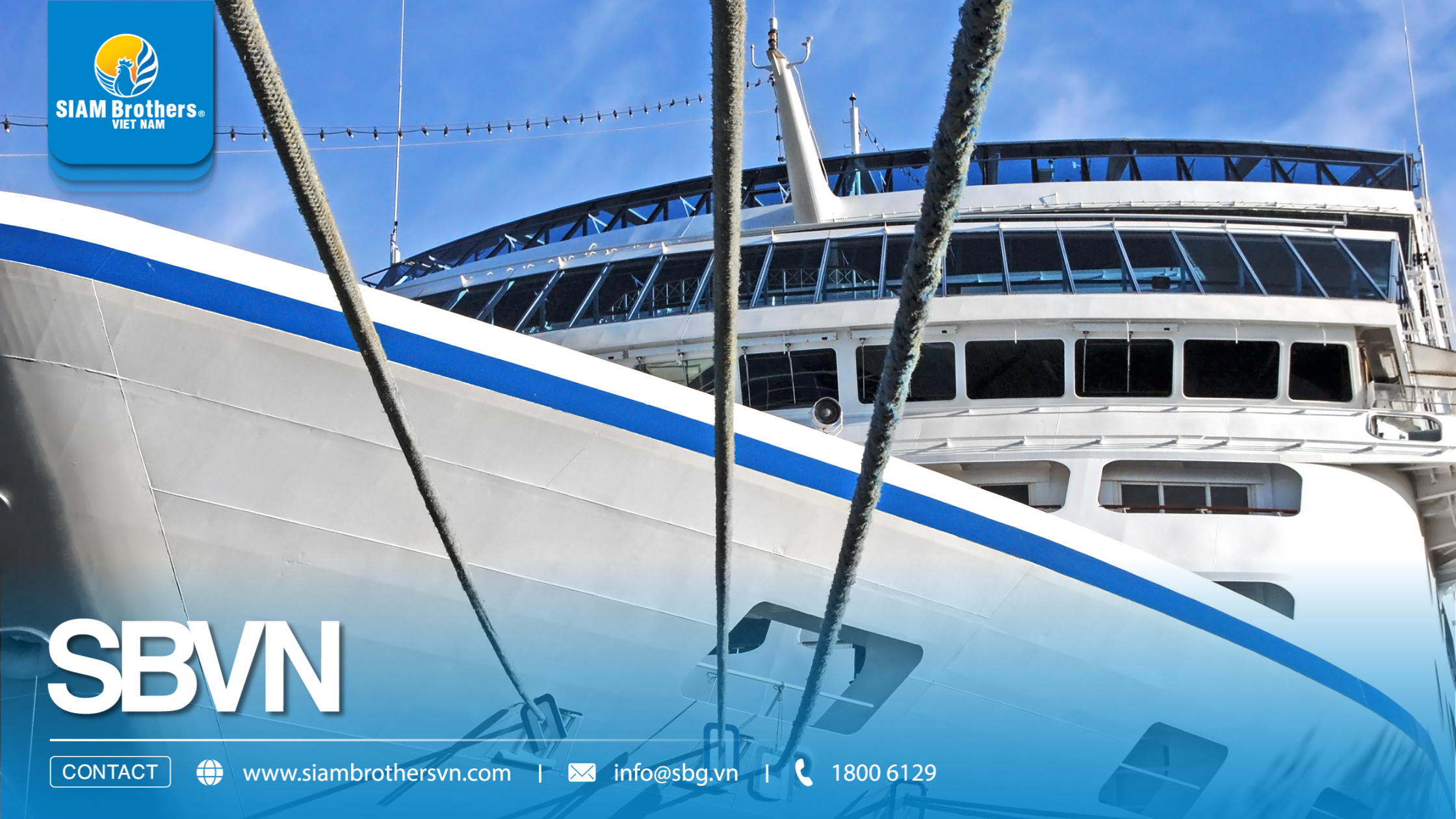
A Ship Mooring Rope plays a critical role in ensuring vessel safety and stability under all mooring conditions. Determining the correct rope length requires not only considering water depth but also vessel size, load capacity, and real marine environments. Applying standard scope ratios combined with selecting suitable materials such as PP, PE, or Nylon will optimize performance and extend service life.
In addition, practical experience from fishermen and operators can help you avoid costly mistakes when selecting mooring solutions. If you are looking for high-quality Ship Mooring Rope suitable for fishing vessels or cargo ships, contact SIAM Brothers Vietnam today for expert consultation and the best quotation tailored to your needs.
Source: SIAM Brothers Vietnam
Contact us:
► Address: 5th floor, VRG Building, 177 Hai Ba Trung Street., Xuan Hoa Ward, Ho Chi Minh City, Vietnam
► Hotline: 1800 6129
► Tel: (+84) 28 38 912 889
► Email: info@sbg.vn
► Follow us for more details at: Facebook - Zalo OA - Tiktok - Youtube - LinkedIn
Download SBVN ID app here:
► CHPlay
► Appstore