
- 1800 6129

Among the many types of ropes available today, each with different materials, diameters, structures, and load-bearing capacities, choosing the right rope is not only essential for smooth operation but also helps reduce safety risks during use. Understanding working load limit, breaking strength, safety factor, and usage environment will help users select the most suitable rope for each practical need. Let’s explore how to choose rope by load capacity with SIAM Brothers Vietnam in the article below.
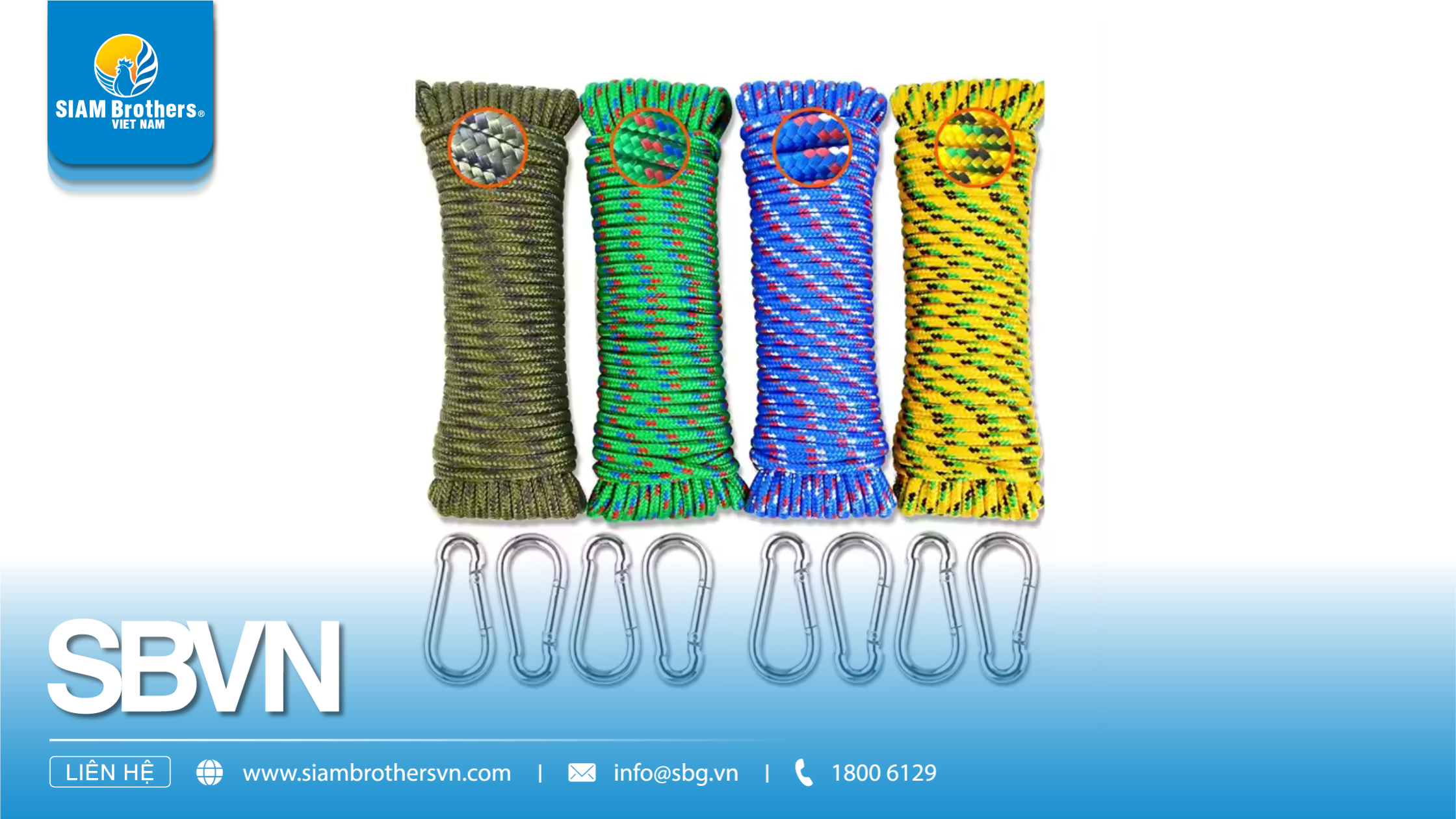
Choose Rope by Load Capacity - Source: SIAM Brothers Vietnam
Rope is widely used in many fields such as household applications, agriculture, marine operations, logistics, construction, camping, sports, and industrial work. However, not every rope has the same load-bearing capability. If the rope is not suitable for the required load, it may stretch, fray, wear out, break, or create safety risks during use.
Load capacity directly affects rope safety. When a rope is subjected to force beyond its recommended limit, the risk of rope failure increases significantly. This can damage goods, equipment, or even endanger operators, especially in applications such as pulling loads, mooring, securing heavy objects, or long-term outdoor use.
Choosing a rope that is too small may cause it to wear out quickly and require frequent replacement. On the other hand, choosing a rope that is too large for the actual need may increase costs and make handling more difficult. Therefore, selecting rope according to the correct load capacity helps balance performance, durability, and investment cost.
Before selecting a rope, users should understand several important terms related to load-bearing capacity. These factors are the foundation for determining whether a rope is suitable for a specific application.
Working Load Limit, often abbreviated as WLL, refers to the safe load that a rope can handle under actual working conditions. This is a more important specification than simply looking at the rope’s size or judging its strength by appearance.
For example, if a rope has a recommended working load limit of 500 kg, users should not use it for objects heavier than this level, especially in conditions involving vibration, friction, or sudden shock loads.
Breaking Strength refers to the maximum force that causes a rope to break under testing conditions. This figure is usually much higher than the working load limit. However, users should not operate a rope close to its breaking strength, because real working conditions are often more complex than laboratory testing environments.
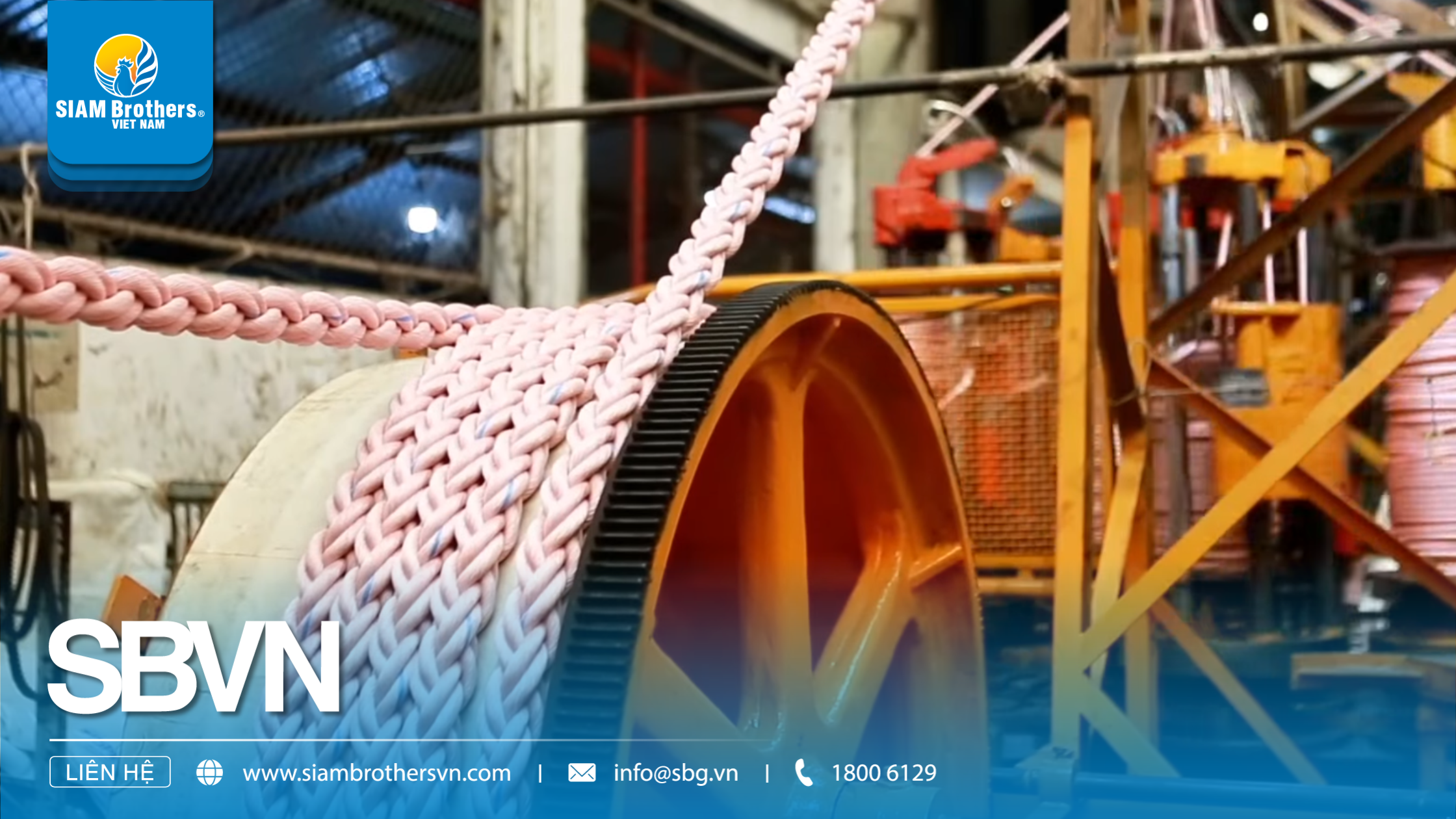
Choose Rope by Load Capacity - Source: SIAM Brothers Vietnam
Safety factor is the ratio between breaking strength and safe working load. For example:
Breaking strength of rope: 5,000 kg
Safety factor: 5:1
Safe working load: 1,000 kg
This means that although the rope may withstand up to 5,000 kg under test conditions, the safe working load in real applications should be around 1,000 kg. For high-risk tasks, users should pay close attention to the safety factor and technical specifications provided by the manufacturer.
The strength of a rope does not depend only on its diameter. It is also affected by material, structure, manufacturing technology, and usage conditions.
Each rope material has its own characteristics. PE rope usually offers good water resistance, making it suitable for outdoor and aquaculture environments. PP rope is lightweight and easy to use, suitable for many common applications. Nylon rope has high tensile strength and good elasticity. Polyester rope stands out for its strength, UV resistance, and stability in outdoor environments.
For decorative, handmade, or interior design applications, users may also choose cotton rope, jute rope, or seagrass rope. However, natural fiber ropes are generally not suitable for heavy-load applications.
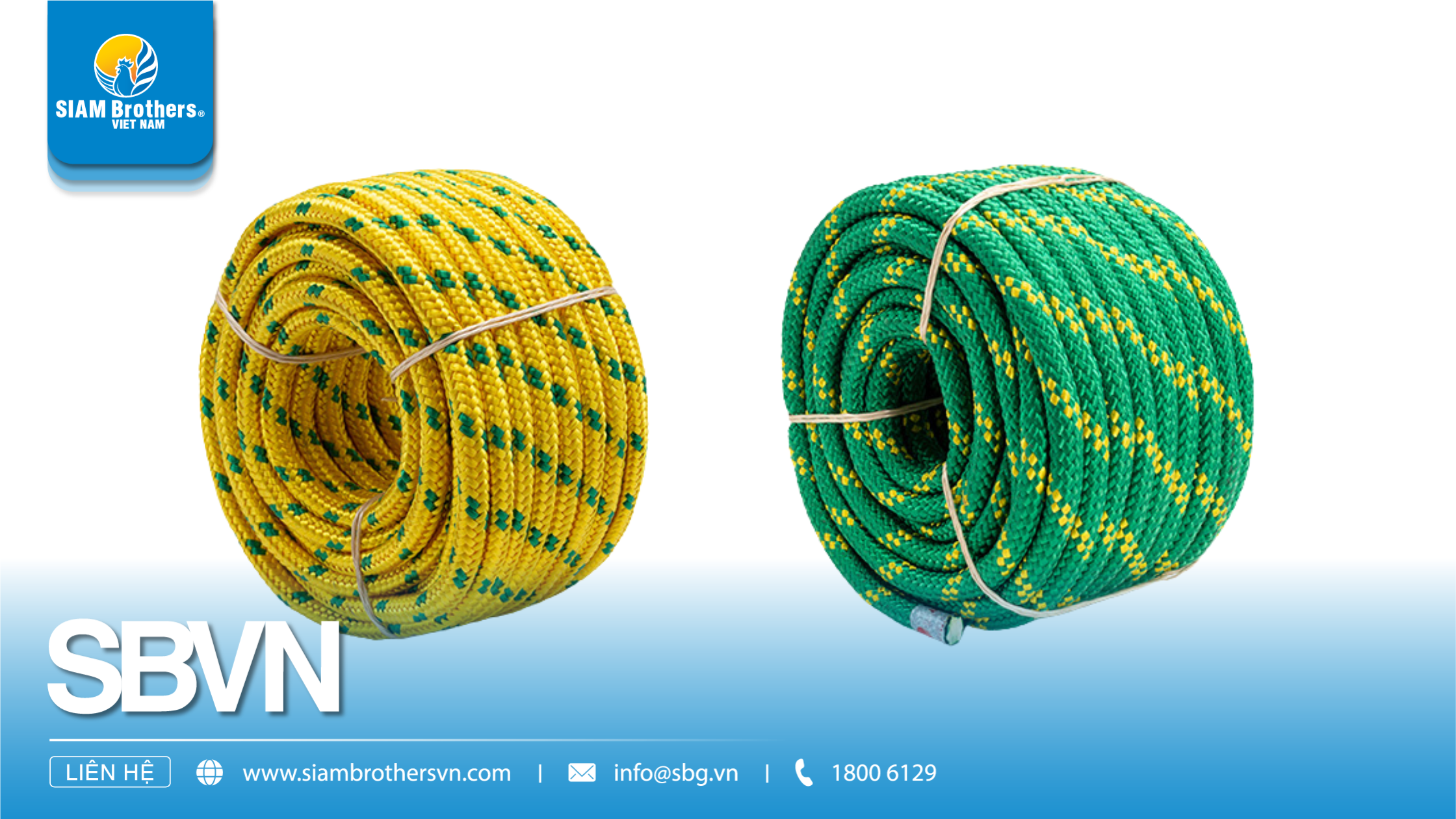
Choose Rope by Load Capacity - Source: SIAM Brothers Vietnam
In general, the larger the rope diameter, the higher its load-bearing capacity. However, diameter is not the only factor that determines rope strength. Two ropes with the same size but different materials or structures may have very different load capacities.
Therefore, when choosing rope by load capacity, users should not rely only on rope thickness. They should also check technical specifications, intended use, and environmental conditions.
Rope structure also has a significant impact on durability and load-bearing capacity. Some common rope structures include:
Twisted rope: easy to use and widely applied in many fields.
Braided rope: strong, compact surface, and good load-bearing capability.
Core rope: commonly used for applications requiring higher strength.
Depending on the application, users should select the appropriate rope structure to ensure performance and safety.
Ropes used indoors, outdoors, in seawater, in chemical environments, or in high-friction areas all have different requirements. For example, ropes used at sea need good resistance to saltwater, UV rays, and abrasion. Meanwhile, ropes used for decoration may prioritize appearance, color, and softness rather than load capacity.
|
Material |
Load-Bearing Capacity |
UV Resistance |
Water Resistance |
Elasticity |
Suitable Applications |
|
PE |
Good |
Very good |
Very good |
Low |
Marine, aquaculture, agriculture, outdoor use |
|
PP |
Medium to good |
Fair |
Very good |
Low |
Household use, light logistics, packaging, camping |
|
Nylon |
Very good |
Medium |
Good |
High |
Load pulling, industrial use, mooring applications requiring elasticity |
|
Polyester |
Very good |
Very good |
Good |
Low to medium |
Marine, construction, industrial, outdoor applications |
|
Cotton / Natural rope |
Low to medium |
Low |
Low |
Medium |
Decor, handmade products, interior design, decoration |
The table above shows that each rope type has its own strengths. For outdoor, marine, or aquaculture use, water resistance, UV resistance, and abrasion resistance should be prioritized. For household, handmade, or decorative applications, users may also consider appearance and ease of handling.
Determining the load level is an important step before selecting rope. Users should estimate the weight of the object that needs to be tied, pulled, or secured, then choose a rope with a safe working load higher than the actual requirement.
|
Reference Load Level |
Common Applications |
Notes When Choosing Rope |
|
Under 100 kg |
Household use, DIY, decor, handmade |
Prioritize appearance and ease of handling; high load capacity is not required |
|
100 - 500 kg |
Camping, agriculture, securing light goods |
Choose durable rope that is easy to knot and water-resistant if used outdoors |
|
500 - 2,000 kg |
Logistics, pulling goods, securing equipment |
Check load specifications and safety factor carefully |
|
Over 2 tons |
Industrial, marine, construction |
Choose specialized ropes with clear technical specifications from the manufacturer |
The table above is for reference only. For heavy-load tasks, safety-related operations, or use in harsh environments, users should check the manufacturer’s technical specifications before making a selection.
In addition, ordinary ropes should not be used for lifting people, personal safety protection, or applications requiring specialized safety standards unless the rope is specifically designed and certified for those purposes.
Each field has different operating conditions, so the rope selection criteria should be adjusted accordingly.
|
Application |
Priority Criteria |
Suitable Rope Types |
|
Marine |
UV resistance, saltwater resistance, good strength |
PE, Polyester |
|
Aquaculture |
Saltwater resistance, outdoor durability, long service life |
PE, specialized PP |
|
Logistics |
Tensile strength, abrasion resistance, easy handling |
Nylon, Polyester, PP |
|
Construction |
Heavy-load capacity, high durability, safety |
Nylon, Polyester |
|
Camping & Outdoor |
Lightweight, portable, water-resistant, versatile |
PP, PE |
|
Household & DIY |
Easy to use, flexible, cost-effective |
PP, Cotton, natural rope |
|
Decor & Handmade |
Aesthetic appeal, softness, easy shaping |
Cotton, seagrass rope, jute rope |
For daily multipurpose applications, users may prioritize lightweight ropes that are easy to handle and moderately durable. For professional applications such as marine operations, logistics, or construction, the most important factors remain load-bearing capacity, material durability, and operational safety.
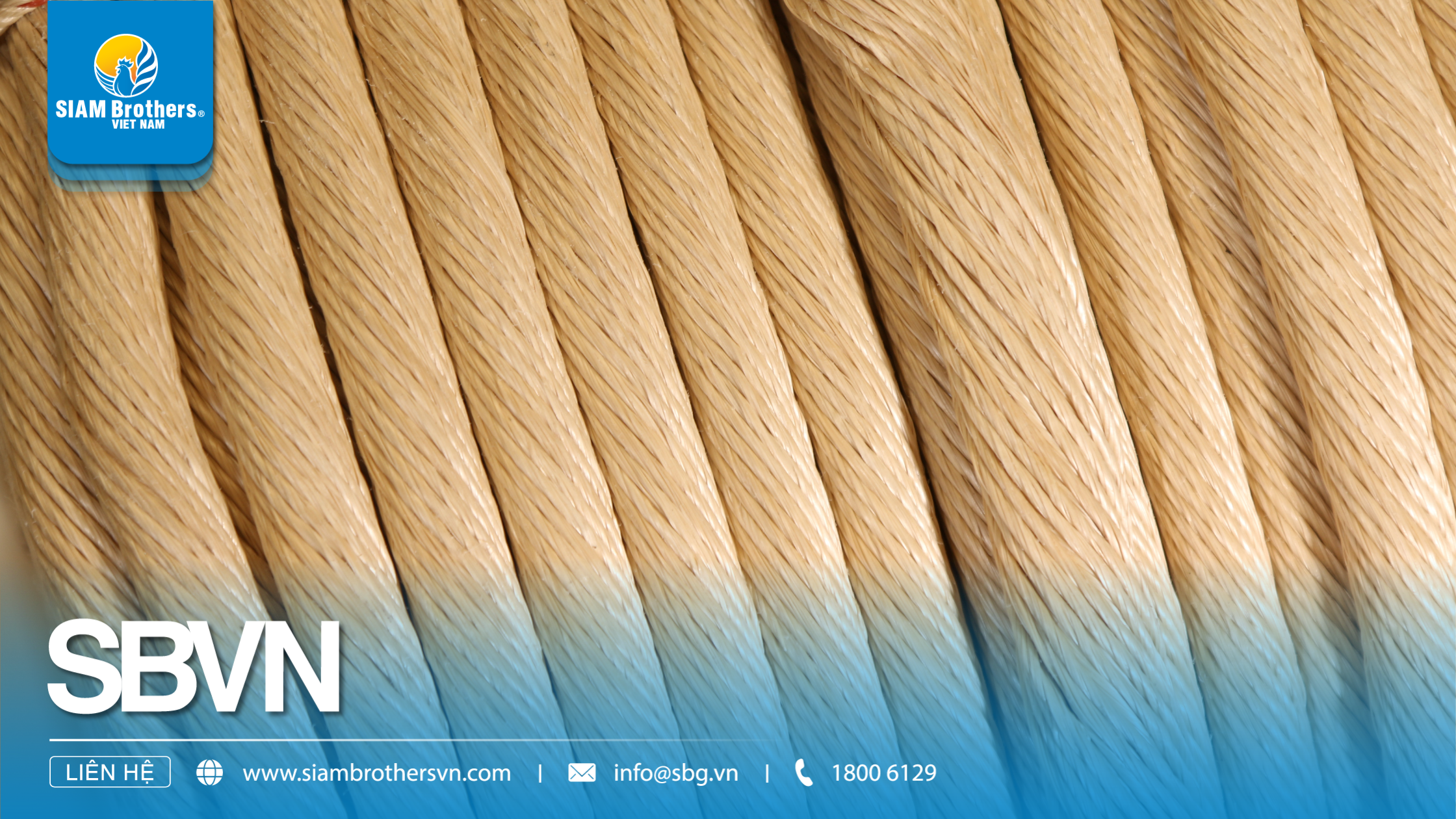
Choose Rope by Load Capacity - Source: SIAM Brothers Vietnam
Common mistakes include selecting rope based only on diameter, ignoring load capacity, failing to consider safety factor, and choosing the wrong material for the usage environment. These mistakes can cause the rope to wear out quickly or become unsafe during operation.
Ropes should be inspected regularly and replaced when signs of damage appear. After use, ropes should be cleaned, dried, and stored in a cool, well-ventilated place. Avoid dragging ropes across sharp edges, and perform periodic inspections when ropes are used for heavy-load applications.
Choosing rope according to the correct load capacity helps ensure safety, optimize costs, and improve overall performance. Users should carefully consider factors such as working load limit, material, rope structure, and usage environment in order to select the most suitable rope.
Read more: How to Eye Splice 3-Strand and 4-Strand Rope – Most Detailed Beginner’s Guide
Source: SIAM Brothers Vietnam
FAQ - Frequently Asked Questions About Choosing Rope
Q: What is the working load limit of a rope?
A: Working load limit is the safe load that a rope can handle during actual use. This specification is usually lower than breaking strength and should be carefully considered before using rope for load-bearing tasks, pulling goods, mooring, or outdoor operations.
Q: Does a larger rope diameter always mean better load-bearing capacity?
A: In general, ropes with larger diameters usually have higher load-bearing capacity. However, rope strength also depends on material, structure, manufacturing technology, and usage conditions. Therefore, users should not rely only on diameter but should also refer to the manufacturer’s technical specifications.
Q: When should rope be replaced?
A: Rope should be replaced when it shows signs such as fraying, abrasion, core damage, deformation, severe discoloration, or reduced elasticity. For heavy-load, marine, construction, or industrial applications, regular inspection and timely replacement are essential for safety.
Contact us at:
Address: 5th Floor, VRG Building, 177 Hai Ba Trung Street, Xuan Hoa Ward, Ho Chi Minh City, Vietnam.
Tel: 028 39 912 889
Hotline: 1800 6129
Facebook: www.facebook.com/siambrothersvn
Email: info@sbg.vn
YouTube: youtube.com/@siambrothersvietnam1728
X: x.com/sbvnjsc
Zalo OA: zalo.me/1402339229697925373
SBVN ID App:
CHPlay: https://bit.ly/SBVNID-Android
App Store: https://bit.ly/SBVNID-iOS








Specializing in Agricultural and Fisheries Products & Multipurpose Wire