As urban rivers face growing demands for waste control, technically standardized plastic floating buoy designs combined with high-quality LLDPE materials help enhance durability, reduce maintenance costs, and ensure environmental safety. In this article, SIAM Brothers Vietnam provides essential insights into the structure, materials, design parameters, and key considerations when selecting plastic floating buoys for modern river trash barrier systems.
1. What Are Plastic Floating Buoys? Applications in River Trash Barrier Systems
Plastic floating buoys are buoyant devices manufactured from engineering plastics such as HDPE or LLDPE, designed with hollow or solid structures to provide stable buoyancy in aquatic environments. These buoys typically feature UV resistance, saltwater tolerance, mechanical strength, and long-term performance under variable weather conditions. At SIAM Brothers Vietnam, advanced manufacturing standards are applied to ensure that plastic floating buoys maintain buoyancy, sealing integrity, and operational safety throughout their service life.

Key characteristics of plastic floating buoys:
- Stable buoyancy achieved through thick-walled structures and corrosion-resistant materials
- Reliable performance in dynamic water environments with floating debris
- Modular installation, adaptable to various river terrains
- Reduced risk of leakage or cracking during long-term operation
Why plastic floating buoys are widely used in river trash barriers:
- High load-bearing capacity, maintaining barrier stability even under heavy debris accumulation
- Resistance to oxidation and corrosion in polluted, brackish, or wastewater environments
- Easy integration with ropes, cables, connectors, and anchoring systems
- Lower maintenance costs due to long service life and superior mechanical durability
- Compatibility with straight, V-shaped, or curved barrier designs following river geometry
2. Materials Used in Plastic Floating Buoys: What Makes HDPE/LLDPE Superior?
For river trash barrier systems, the material composition of plastic floating buoys directly determines durability, stability, and long-term operational efficiency. HDPE (High-Density Polyethylene) and LLDPE (Linear Low-Density Polyethylene) are widely trusted due to their excellent mechanical strength and environmental resistance.

Key material properties of HDPE/LLDPE:
- High UV resistance, ensuring long-term outdoor performance without rapid aging
- Strong corrosion resistance, suitable for freshwater, brackish water, and polluted urban rivers
- Lightweight structure combined with high load capacity, supporting stable operation under strong currents
2.1 Technical advantages of LLDPE in plastic floating buoys for trash barriers
- High impact resistance, minimizing deformation when struck by large debris or floating objects
- Excellent flexibility, allowing plastic floating buoys to absorb force and reduce cracking risks
- High sealing integrity in hollow-molded structures, maintaining buoyancy over extended periods
- Resistance to sudden temperature changes, suitable for tropical and humid climates
2.2 Practical benefits of choosing HDPE/LLDPE plastic floating buoys
- Optimized operating costs due to long lifespan and reduced replacement frequency
- Consistent waste collection performance through stable buoyancy and shape retention
- Environmentally safe materials that are non-toxic and recyclable
- Enhanced reliability for public infrastructure projects, especially in high-debris areas

3. Technical Design of Floating Buoy Systems in Trash Barriers: Key Parameters
3.1 The role of technical design in operational efficiency
When deploying river trash barrier systems, the structure and design parameters of plastic floating buoys directly affect debris retention, system stability, and long-term durability. An optimized design enables safe operation under strong currents, fluctuating water levels, and impacts from floating objects.
Key design considerations for plastic floating buoys:
- Synchronization between floating buoys, anchoring ropes, and barrier frames to reduce load stress
- Load-bearing capacity in the horizontal direction and buoyant force in the vertical direction
- Structural geometry that maintains stability even when debris accumulates
3.2 Core technical specifications for plastic floating buoy design
To maximize durability and service life, floating buoy systems must comply with standards related to materials, dimensions, and load ratings.
Essential specifications include:
- Buoy volume and buoyancy coefficient to support debris load and barrier structures
- Wall thickness ranging from 4 mm to 8 mm, depending on current strength and pollution levels
- Standard or customized dimensions adapted to river width and site conditions
- Connection mechanisms such as locking systems, bolts, or joints to maintain stability under changing currents
3.3 Maintenance and replacement considerations during operation
An effective river trash barrier system depends not only on plastic floating buoy quality but also on maintenance efficiency.
Priority factors include:
- Modular designs that allow easy disassembly and routine inspection
- Replacement of individual buoy modules without disrupting the entire system
- Compatibility with various anchoring ropes and connectors to reduce operational costs

4. Key Criteria for Selecting Plastic Floating Buoys for River Trash Barrier Systems
4.1 Material Selection and Durability
- Prioritize virgin HDPE or LLDPE materials to ensure long-term durability of plastic floating buoys.
- Verify UV resistance to minimize brittleness and cracking when buoys are exposed to prolonged sunlight.
- Select buoys with chemical resistance and tolerance to brackish or saline water, especially for river mouths and estuarine areas.
4.2 Buoyancy Capacity and Load Bearing
- Ensure sufficient buoyancy to support the trash barrier frame, anchoring ropes, and accumulated floating debris.
- Choose large-volume buoys or modular combinations for areas with high waste flow.
- Prefer designs with stable buoyancy coefficients to prevent tilting, rolling, or loss of flotation during operation.
4.3 Design and Structural Configuration
- Select plastic floating buoys with wall thickness ranging from 4 mm to 8 mm to enhance impact resistance.
- Use locking or bolted connection systems to maintain structural stability under strong currents.
- Evaluate compatibility with ropes, anchor chains, or barrier frames depending on specific project requirements.
4.4 Installation and Maintenance Capability
- Modular buoy designs are recommended for easy installation, inspection, and partial replacement.
- Lightweight buoy structures facilitate transportation and rapid on-site deployment.
- Ensure compatibility with existing local anchoring systems to optimize operational costs.
4.5 Supplier Credibility and Quality Standards
- Verify material certifications and manufacturing standards to ensure safety and long-term durability.
- Prioritize suppliers with proven experience in plastic floating buoy production and river trash barrier solutions.
- Review warranty policies, technical support, and long-term supply capacity for system-wide implementation.

5. FAQ: Frequently Asked Questions About Plastic Floating Buoys for River Trash Barriers
5.1 What is the typical lifespan of plastic floating buoys used in river trash barriers?
- The service life of plastic floating buoys generally ranges from 8 to 15 years, depending on material quality and environmental conditions.
- Buoys made from virgin HDPE or LLDPE offer superior UV resistance, significantly extending operational lifespan.
- Regular maintenance and inspection of anchoring systems help preserve long-term durability.
5.2 Can plastic floating buoys withstand strong water currents?
- Plastic floating buoys are engineered to endure continuous hydraulic forces, especially when combined with high-quality anchoring chains and ropes.
- Thick-walled buoys with secure locking connections enhance system stability during rising water levels or fluctuating currents.
- Accurate buoyancy and load calculations should be based on on-site hydrological surveys.
5.3 When should plastic floating buoys be replaced?
- When buoys exhibit deep scratches, cracks, swelling, or deformation caused by environmental exposure or heavy impact.
- When buoyancy loss or structural deformation exceeds allowable technical limits.
- Periodic inspections every 6–12 months are recommended to detect early signs of deterioration.
5.4 Are plastic floating buoy systems easy to maintain?
- Modular buoy designs allow quick disassembly and are well-suited for operators requiring efficient maintenance.
- Routine cleaning and inspection of buoy surfaces and connection points prevent debris accumulation.
- Anchoring chains and ropes should also be inspected regularly to maintain overall system stability.
5.5 Are plastic floating buoys suitable for rivers with high debris volume?
- Yes, provided that buoys with sufficient volume, high buoyancy, and anti-tilt designs are selected.
- For rivers with dense waste flow, thick-walled LLDPE buoys combined with reinforced trash barrier frames are recommended.
- Site surveys are essential to determine the most appropriate buoy configuration for each river segment.
5.6 Which supplier provides reliable plastic floating buoys for river trash barrier solutions?
- Users should prioritize manufacturers with extensive experience in producing LLDPE plastic floating buoys and environmental protection systems.
- Reliable suppliers offer material certifications, test reports, and customized design consultation for specific projects.
- SIAM Brothers Vietnam is a reputable provider with stable manufacturing capacity and optimized solutions for river trash barrier systems.
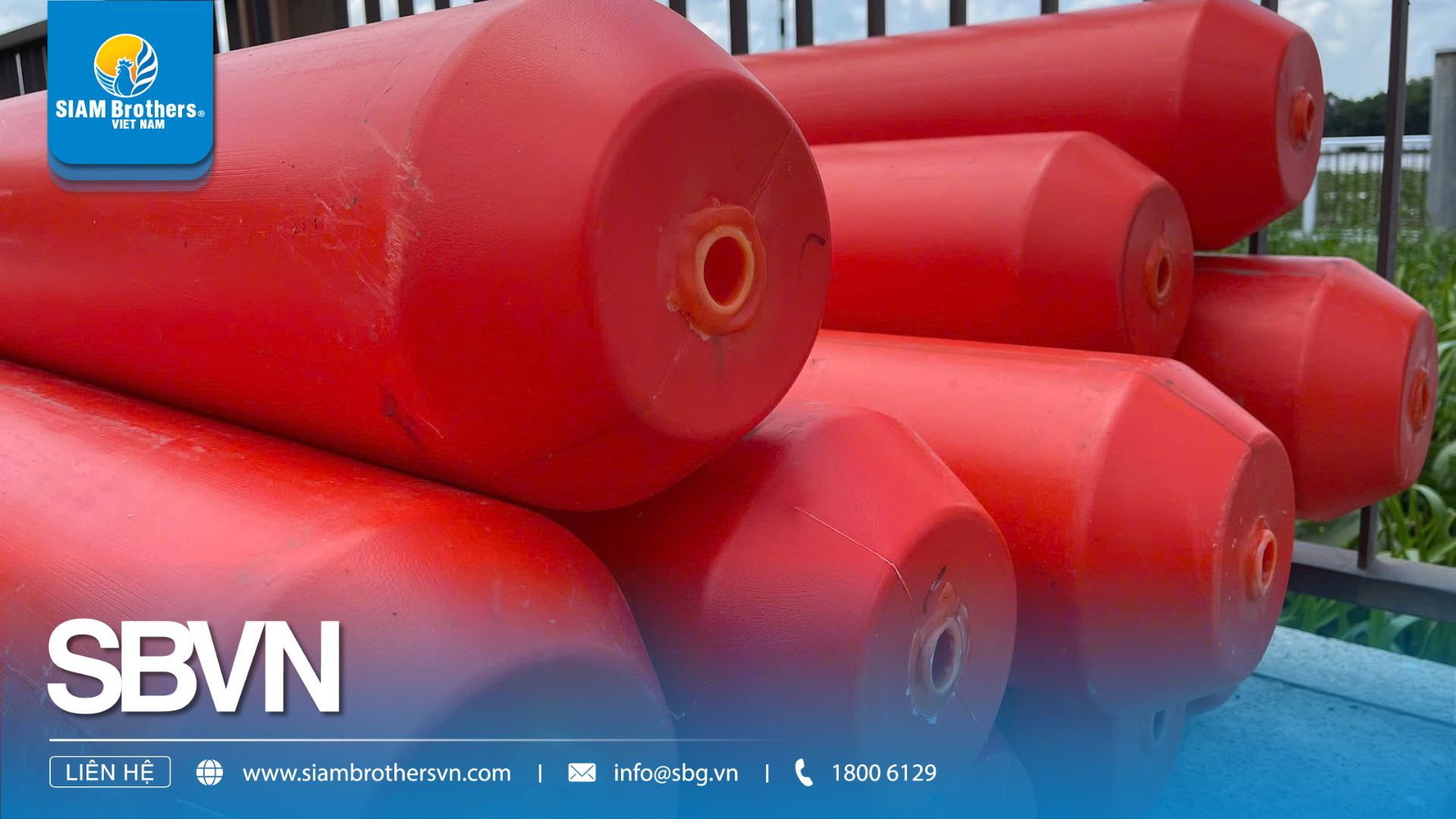
Plastic floating buoys play a critical role in developing safe, durable, and efficient river trash barrier systems. With optimized design, weather-resistant HDPE/LLDPE materials, and stable load-bearing capacity, plastic floating buoys help control floating waste, reduce pollution, and protect natural water flow. When selecting buoys, attention should be given to technical standards, buoyancy performance, wall thickness, and connection capability to ensure long-term effectiveness.
If you are seeking high-quality plastic floating buoy solutions for environmental projects, contact SIAM Brothers Vietnam for professional design consultation and customized configurations tailored to your operational needs.
Source: SIAM Brothers Vietnam
Contact us:
► Address: 5th floor, VRG Building, 177 Hai Ba Trung Street., Xuan Hoa Ward, Ho Chi Minh City, Vietnam
► Hotline: 1800 6129
► Tel: (+84) 28 38 912 889
► Email: info@sbg.vn
► Follow us for more details at: Facebook - Zalo OA - Tiktok - Youtube - LinkedIn
Download SBVN ID app here:
► CHPlay
► Appstore